Showing posts with label analysis. Show all posts

Wednesday, July 31, 2013

Luis Bunuel Retrospective- Pt. 2- THE MEXICAN JOURNEYMAN


       Luis Bunuel was specifically brought in to Mexico to be a commercial director, and ultimately was, working mainly in melodrama, yet always including a personalized surreal touch that he had perfected. To quote the Swedish mater Ingmar Bergman, "Bunuel always made Bunuel films." Bunuel's style always surfaced in one way or another, be it in dream sequences, themes, or certain images. Bunuel made the bulk of his filmography in Mexico, from La Grand Casino to Simon of the Desert. 
        This is the area where Bunuel receives his distinction of under appreciated and often forgotten, at least in America. Many of these films are completely unavailable in America on DVD, or at least very, very, rare. I admittedly have not even seen the bulk of them since they are just unavailable. Terrible Mexican video companies own the rights to many of the films, and utterly refuse to sell them or even release them on DVD. The subtitles often have typos, and the image is a true travesty.
       Bunuel's earliest film of the period that garnered serious attention was Los Olvidados, a Bunuel-take on the neo-realist movement that was capturing world cinema. Bunuel takes his camera to the streets, using non-actors and real settings to show the plight of youths forgotten by society. Bunuel's major touch comes in the form of a dream sequence, with slow-motion feathers floating to the ground, a la Vigo's Zero du Conduit and a bloodied dead boy laughing on the ground. The sequence is truly stunning, and hides the otherwise bleak nature of the film for just a moment. Bunuel is brutal and relentless in his portrayal of poverty.
       Another major film for the period is El, returning to literally examine the theme of sexual repression and obsession, showing a man who loves the very idea of a woman so much he is willing to do anything to hold onto her. The film is stacked with Bunuel's religious iconography and carries serious criticism for the Catholic church, where a priest not only refuses to help the tortured heroine, but actually rats her out to her husband. This is an early direct example of Bunuel's treatment of religious hypocrisy, which was later visited time and time again.
       Again, I must lament the fact that so many of these films are unavailable, including Ensayo de un Crimen, Susana, Subida Au Cielo, and Wuthering Heights. It represents a huge blind spot in our consciousness of a great filmmaker who overcame producers to stay true to his vision. I dream that one day a company like Criterion will pick up these titles and finally do them justice.
       Bunuel's most acclaimed film of the period is Nazarin, a film that is thematically similar to his well-known follow-up. Nazarin follows Father Nazzario, an idealistic and certainly good Catholic priest who risks his reputation for a prostitute and constantly battles the church. The story is a critique of the cold church and of idealism and general, yet it also parodies the story of Christ. Nazario is often mistaken as a "second coming" type figure. Two of the prostitutes follow the man to the world's end, even though he urges them against it, saying he is just a humble man. Nazario arrives at a village where a young girl is sick. The villagers urge him to perform a miracle, which he refuses, but he does pray for the girl. The next morning, the woman praise the priest, but he insists God intervened. However, Nazario is silent when the group stumbles upon a massive disaster, and is unable to help anyone, even unable to hear a woman's confession as she is fixated only on seeing her lover. The film's final image is incredibly powerful, involving intense despair and a pineapple. Although I covered what seems like a good amount, much more is in store in the film and  do not wish to spoil.
       The follow-up was made not in Mexico, but was instead Bunuel's return to Spain. I don't mean to exaggerate, but Viridana may be my all-time favorite film, and is, in my opinion, cinematic perfection. The story is mainly a critique of idealism, but dives in against organized religion, obsession, lust, chastity, poverty, and sensitivity. It's a truly deep and spellbinding work that follows a cold young nun as she visits her uncle. Perhaps that may not sound thrilling, but I urge anyone to watch it. I do not wish to give away a single detail of the plot explicitly. The film's message is best seen in an odd image Bunuel presents to us- a character sees a dog tied to the bottom of a cart. The character is shocked, as if the tired Dog stops moving, it will be strangled. The character attempts to convince the owner to let the dog in the cart, and when  the owner refuses, the character outright buys the dog, much like what our heroine Viridiana does with the beggars. However, as out character walks away with the dog, another cart passes, which has another dog walking under it, tied to the axle. It's a hugely powerful and slightly abstract image that perfectly captures the film.
        Bunuel's next film, The Exterminating Angel, made again in Mexico but attempting to look like France, offers another abstract analogy, this time taking on the ruling class directly. A dinner party, for unknown reasons, cannot leave a room. In such a simple, absurd concept, Bunuel shows us his opinion of the human lab rats that make up the upper class, stuck in the regime of parties and excess. AT the film's end, the priest and church goers in a Catholic cathedral suffer the same fate.
        This period of Bunuel's career is characterized with his most accessible and straight-forward films, as they were made with the intention of profitability first and foremost. Bunuel's later career is defined by him attempting to unlearn the narrative trick of this period, creating more challenging and difficult films.
     

Monday, July 29, 2013

Luis Bunuel retrospective- Part 1- EARLY LIFE AND EXPERIMENTS


       July 29th, 1983 (30 years ago, today) marked the death of Luis Bunuel. To some who consider themselves fans of film, this may not mean anything, while it may mean everything to some. Luis Bunuel, despite his sterling reputation (for example, They Shoot Pictures lists him as one of the three "master" directors, meaning a perfect 10, along with Howard Hawks and Alfred Hitchcock), is criminally unwatched and undervalued among the general public. Many of his films are rare and hard to find, but I'll get into that later.
       Now, I have written on Bunuel much before, but now, I just don't want to republish something, which I've done on a few occasions. My writings on Bunuel earlier were academic and lengthy. Perhaps I will publish it at a later date, but for now, I will write new material. I may borrow from my previous writings, however.
       Now, perhaps a little bit of background on Bunuel is needed to truly understand him. Bunuel was born in 1901 in Spain, and grew up in a religious aristocratic family, two relations which run deeply through pretty much every film he has ever done. Additionally, Bunuel admits in his (excellent) biography that he was very sexually oppressed, another constant theme. When he was eighteen, he went of to University in Madrid, where he met several creative minds that like Federico Garcia Lorca and Salvador Dali, with whom he would be closely affiliated.
       Bunuel's artistic awakening came in Paris in the late 1920s. At this time, he allied with many of the surrelists, such as Max Ernst. One of the most fascinating parts of Bunuel's biography The Last Sigh is that the book works as a first-hand report of the surrealist movement, and Bunuel really dives into what the movement was in his eyes- less artistic, and more of a new system of reality which rejected everything society cherished. In Paris, Bunuel worked as an assistant for the early French silent director Jean Epstien.
       In 1929, Bunuel and Dali set out to make a film with funds Bunuel secured from his mother, despite her never actually seeing the film, and never expressing any interest in doing so. The result was Un Chien Andalou, which still is Bunuel's most popular film, although it does not show off the director's skills sufficiently. Bunuel's genius was in story-telling, and Un Chien  is pure non-narrative, and Bunuel stated several times that it is supposedly total nonsense. I must admit that when I was an early teenager I first heard of Bunuel through Un Chien, where he was essentially just "the guy that's not Dali."
       Un Chien Andalou had an instant and massive influence, specifically for its odd structure and bizarre images, which in fact does capture much of Bunuel's essence. Perhaps one of cinema's most iconic images is the woman being held by a man (who is actually Bunuel) as we see a cloud slice through the moon. Then we see an eye sliced (where, yes, the name of this blog comes from) with plasma oozing from the slit. It's instantly memorable, as is another fantastic image, of a man weighed down by a dead donkey, a grand piano, and two perplexed priests (one of whom was Dali), which represents a recurring Bunuel theme- the strains of upper society and religion on all aspects of one's life. Dali's influence can be felt in many of the images, such as ants crawling through a man's hand. Bunuel's dreams were much more rooted in a worldly reality than Dali's, which kept him grounded and decidely unpretentious.
       Next, Dali and Bunuel collaborated one more time before breaking their partnership permanently. This film was L'Age D'Or and is certainly much more Bunuel's than Dali's. The collaboration was fading quickly due to the emergence of Galla Dali, Dali's falling out with the surrealists, and that the duo simply wasn't as inspired together as they once were. The film was just over an hour long, and bore the distinction of being one of the earliest sound films made in France. The film is certainly a spiritual sequel to Un Chien and resembles it like no other part of Bunuel's filmography. Here, Bunuel revisits many of the same themes, but takes an extra blade out towards the church with the final scene, which is a reenactment of a scene from De Sade's 120 Days of Sodom with Jesus as the perverse duke. The Christ figure comforts a young girl, leads her back into the cave, and after a scream, he emerges, now without a beard. The final image is a cross adorned in scalps of women, which implies violence against woman is the trademark of church history.
        Compared to Bunuel's later filmography, his first two films are unique and worth visiting, but certainly do not reflect Bunuel's filmography at all. Bunuel was so much more than chocking imagery, and I have a tough time getting some people to watch any of his films if they are familiar and dislike his trademark eye slice. L'Age D'or shocked France so much that it caused riots and was banned by the government until 1980. Bunuel fled France, not returning until the 1960s. He went to Spain, where he filmed the thirty minute Las Hurdes, financed for a minimal amount of money.
        Las Hurdes receives a good amount of recognition for its status as an early documentary, and one of the earliest with such a political statement like showing the crippling poverty of regions in Spain. We see several shocking images again, but now, they are rooted within reality. We see close ups of a young girls mouth, as we hear that in a few days, the toddler will be dead. A donkey is stung to death by a hoard of bees while orchestral music and a dry narration goes forth. Bunuel again seizes an opportunity to attack a favorite target by focusing on a massive structure among this wasteland- a catholic cathedral, of course.
        Las Hurdes again caused huge controversy, halting Bunuel from making any films from years to come. Bunuel fled Spain for the United States on the heels of the Spanish Civil War, where he would have certainly been viewed as a political threat subject to assassination. Bunuel landed in Los Angeles at first, living with Charlie Chaplin for some time (Chaplin allegedly used to scare his daughter, Geraldine, by telling her images from Un Chien Andalou  before bedtime) and then worked at the studio. Eventually, his wife came over with his two sons, and the director moved to New York, where he was on the MoMa board before Communist ties forced him to resign. Bunuel was broke in New York with no job and no prospects, until an old friend living in Mexico contacted him with a directing opportunity. The year was 1947, and Bunuel had not been behind a camera in fifteen years, and had never even made a feature length narrative, but he accepted the job to make La Gran Calavera.

Wednesday, July 24, 2013

The growing distance between film and television


       Television, with the birth of original, in-depth programming such as Breaking Bad, has been seen as a more artistic and in depth story telling medium than ever before. Content is riskier and freer than what broadcast television could ever offer. Shows can now tell completely inter-connected stories without trying to bring in new viewers week after week. Now, with the internet, viewers can get caught up to date on their own time.
       Some even argue that television is the new place to tell in-depth dramatic stories, and film is becoming a mix of two extremes- low-budget indies, and high-budget popcorn fare. Studios no longer want to take the risk on higher budget dramas, and the public suggests that television is the place to tell them. If Game of Thrones was published ten years earlier, it would likely be a movie series. To many, television is the medium to tell new dramatic stories. It makes sense in a way- you can obviously go so much more in depth by telling a story over twelve hours than in two or three.
       Now, I don't mean to generalize here- there have been some great higher budget dramatic films in the last few years, such as Lincoln, and the superiority of television is a pretty controversial opinion, even though many serious writers now swear by it. People seem to want to write for TV much more than film today, and see it as not only either to get into, but more exciting and free to work for.
       Film, to me at least, is more effective than television because of its brevity. The longest of (commercial) films run about 3 hours. Every frame holds so much power and meaning. Stories must be completely fulfilling within the small time frame, while an episode of a TV show must complete a small arch but is expected to leave many answers that can be picked up on. Sure, some films have sequels, but usually they are unexpected and only leave a few questions.
       Film, I also argue, is most certainly freer. A single 2-hour film can be made much cheaper than a small run of episodes for a television show that will garner serious attention. Film, when made on a small budget or with total freedom, can be much more experimental and adventurous. Television, I believe, will always be narrative. There will likely never be an experimental television show, and Television's modern rebirth simply means telling much more adults plots, like those on The Sopranos and Breaking Bad.
       In a lot of ways, the brevity and smaller scale (which lends to freedom) of film can never be replicated in an episodic television show, at least in its typical format that can be expanded upon for years and years. Mini-series are an entirely different case, like Fassbinder's Berlin Alexanderplatz, but there could never be a Season two of something as sprawling and unusual as that. As great as something like Breaking Bad, The Sopranos, or The Wire, I don't think its even possible to compare it to a two or three hour film. I won't say one is better than another, but simply different, and as a writer and filmmaker myself, I feel more comfortable and free working within a time frame that forces a critical exclusive editing process as intense as a film screenplay and feature film. Obviously, this is just an opinion, but I assert that the two mediums are simply incomparable, and their only shared similarity is that they are watched on the same screen.

Friday, July 5, 2013

Film Education


        Film is over one hundred years old at this point. This isn't just the creation of the medium, but the creation of the formal language that is film. However, few have a firm grasp on film. Sure, nearly everyone watches the latest blockbusters, but everyone gets film in some way- TV, commercials, just simple videos online. And now, with the internet, video is all around us, yet we really don't understand it any more than people did fifty years ago, and not even that much more than one hundred years.
       Perhaps that is one of the joys of film- the fact that it is an ultimate escape. You understand it all, understand the movement of time and editing as it is presented to you. You know that it can cut and resume in an entirely different place at an entirely different time. But is simple basic literacy enough? Film can go so much deeper than basic narratives, and can be picked apart and analyzed, like literature.
       Which brings me to the main comparison and point: There should be a greater movement to teach film education, like there is to increase literacy and literary appreciation. Film is all around us, and to understand it, we must know more about it. We must know its history, its uses, and its dangers. We must understand how it can be manipulated and how it can communicate ideas through complex cinematography and editing. We must learn how to understand filmic devices, like various types of montage, and how to analyze them and pull the author's intentions out.
       That is what we learn in English classes. Sure, we write daily, so we must know how to write, and how to interpret writing, but now, many important messages are conveyed through film and videos. While making film is not needed, understanding and comprehension is.
       Many documentaries, especially political ones, and topical drama films use filmic language to manipulate the audience into buying the message presented. This is also used in literature, and while it occasionally finds success, tricking audiences is much easier with film, which is ironic in a sense since in literature you are only required to show words, while film requires so much more input  However, every aspect can be subtly manipulated, allowing the author to convey his point with ease and keep audiences in the dark in regards to the attention.
       And so we are taught how to read critically. Another aspect of literary education is quality. People generally read good books. Sure, someone's going to throw a jab in about Twilight or Fifty Shades but that is a different mission. Books like that are not made with the same intention as acclaimed best sellers, and that's perfectly fine. However, I can't honestly say the majority of the most successful films are good. A large part of the reason is, and I'm really trying not to sound like a total fuck right here, is that they simply don't know better. Now, I'm not saying everything is a piece of shit and people are idiots, but I honestly believe the majority of audiences don't realize what films can do. They can do so much more than tell a simple narrative story, which most do. Sure, I love narrative film, but it is perhaps at its most interesting when it toys with the concept of story and works outside of that. Experimental(ish) literature has found great success, while experimental film has mainly received public backlash.
       Sure, some people love experimental films, but most don't get them at all. And that's fine, but perhaps the best use is blending it with narrative and conventional film language. Literature that "thinks outside the box is rewarded and publicly well received because a wider audience gets it, due to literary education. If you teach people how to understand written words, but not how to read they will fall back on primitive stories, not knowing how else to communicate. And that is where film currently is.
       However, the medium is still very young. The first stylistic works are about 100 years old, like the 1913 Student of Prague, which a still is shown from above. I'm not saying that the artform is dead, or decrepit  or dried up, or anything of that sort. In fact, I'm saying the opposite. I'm saying that it's so young that there's so much more to be discovered. We can understand much more. Film's language will become much more complex and its history much more dense. An exciting time awaits us. However, education is essential in the advancement of anything. People must know in order to create. And perhaps that has never been more true than in film.

Wednesday, June 26, 2013

ZERO DARK THIRTY (2012,Kathryn Bigelow) and the issues of Cerebral films


       Zero Dark Thirty, released several months ago to significant critical acclaim, continued Bigelow's career in the direction she paved with 2008's The Hurt Locker. Zero Dark Thirty follows Maya, a young CIA analyst who becomes obsessed with finding Osama bin Laden. I saw the film on it's initial release, and have not had the chance to watch it again, but the film truly stuck in my head- and not in the good way.
       ZDT follows an unfortunate trend of films that have received very good reviews despite very poor plotting and writing in general. These films are labeled cerebral, not in the sense that they make you think, but that they utilize only their heads, and are over-plotted and ultimately heartless. Sidney Lumet used this term in his book Making Movies, but it has been used in other sources as well. Zero Dark Thirty is at the heart of the resurgence of this trend, with films like Michael Clayton and Tinker, Tailor, Soldier Spy. All the films listed have several shared characteristics- long lengths, overly complex plots that are essentially impossible to follow, and  ultimately resulting in a film that is all about the plot and has no time for character development or heart.
       In almost three hours, Bigelow's film covers a ten-year period, sending Maya all over the globe, and constantly introducing characters and plot lines. But we really know nothing about Maya, which is the issue. The film leaves no time to really show her, and as a result she is a background to the complexities of the script. It's like the writers attempted to show how smart they were, and they do end up with a tight knot of a story, but Maya is just a pawn. We know she is totally devoted to her career and has little time for anything else, but in doing so, we neither know her or care about her.
       Every issue in the film comes to light at the conclusion. Osama Bin Laden is killed in the covert mission, where Maya is taken offscreen for nearly thirty minutes. The scene is intense and exceptionally well-done, to the point where its failings in character vanish. It is a suspenseful, well-crafted action sequence that is the obvious strength of the film. However, the film is weakened by its conclusion, where we return to Maya at the base. It attempts to show the film's point, but ends up simply grasping out towards the air. Its hands close around nothing, yet it tries to present us with its find. We just see an empty hand.
       Bin Laden's body is presented to Maya. She asks to be left alone, and over the terrorists body, she weeps. But why? For the loss of her friends who were killed by his organizations? For the loss of her life in ten years hunting a man? For the loss of Bin Laden's life? Because she finally realized all those monkeys died? We have no idea, and we were given no clues. Most people will say that she cries for the years wasted, but we have no indication she feels that way. We see so little of her true self, as she is always consumed by the twists and turns of the plot, to the point where she is suffocated.
      But the worst is not the fact we do not know why she weeps, but that really, we don't care. We don't know or like Maya at all. And thus, the film ends attempting to touch us emotionally, but fails miserably. Zero Dark Thirty's biggest flaw is that its maze of a plot swallows any characters that are being grown.

Monday, June 17, 2013

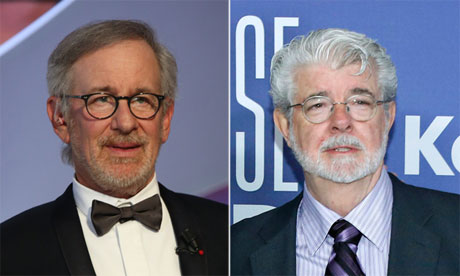
How Spielberg's "Hollywood Implosion" theory isn't that crazy after all


        Last week, Steven Spielberg and George Lucas made a bold prediction regarding the future of the film industry, saying prices will skyrocket for blockbusters after a few 250Mil+ failures. Online, the reception of these comments has been pretty harsh to say the least, with Duncan Jones summarizing the comments as a "a fascinating insight into 2 out of touch, old men." That pretty much sums up the viewpoint of the internet, but really, people are forgetting how much Lucas and Spielburg know about the industry.
       The most common criticism of the statement is simply mentioning the prequel trilogy and Crystal Skull. But really, those two films are irrelevant to the directors' insights and knowledge of the industry. Spielburg continues to make highly acclaimed films, such as Lincoln from just last year. Is the internet's attention span so short that they actually forgot about Spielburg's award-nominated blockbuster. Lucas, on the other hand, has a different perspective- one of failure, after he fought with studios to make Red Tails and even after its completion, Lucas failed to get the marketing he desired, resulting in lackluster box office returns.
       In essence, the two are saying that in the near future, studios will lose huge amount of money on blockbusters. As a result, high-budgeted films will then have higher ticket prices, while lower-budgeted films will actually see a reduction of prices. Spielberg says that something like Iron Man 3 will cost $25 to see, while something like Lincoln will cost just $7. Spielburg goes on to say that in the future, blockbusters will be major events, like live sports or concerts, and thus will have premium prices.
       Many people claim that this is unrealistic, since today, films are almost instantly available online via a pirated copy, and people will simply stop going if prices raise that much. However, these critics seem to forget several things about Hollywood. First, Hollywood has always been about gimmicks designed to put people in seats, and have been doing so since the dawn of television. Be it 3-D, Imax, or a new experience, studios and theaters will invent ways to get people into theaters and if needed, make going to the cinema a major event.
       However, there's surely a limit. At some point, prices will be so high that people will just download a bootleg. But perhaps the biggest step in Spielburg's prediction coming a reality is Hollywood cracking down on piracy once and for all. Copyright laws will soon be altered, and very well could give studios more power to prosecute those that supply the illegal copies of movies, and even those who download them. If prices are raised drastically, studios would be able to force cinemas into hiring additional employees who monitor theaters looking for those with recording equipment. These could be trained studio employees, working at individual theaters with licences to "high-piracy" releases, equipped with special tools, knowledge and legal powers to stop would-be bootleggers and pirates.
       If the theater refuses to comply, then they simply stop getting blockbusters, driving down their attendance and revenue. Watermarks can be subtley placed over images, which is already being done with the Prima Cinema, a $35,000 device which allows individuals to watch first-run Hollywood films in their own home. the watermarks are undetectable to the human eye, but can be seen by computer programs easily. If each theater had a personal watermark on each print of a film, a leaked copy could be tracked to the theater, and even a particular screening.
       So, with raised security and strengthened legal powers, piracy can be seriously halted. If piracy is stifled, films could play for longer periods of time, and an eventual home video release could take place over a year after a theatrical release. I personally have no doubt that if something like Iron Man 3 was exclusive to cinemas for an entire year or more, people would flock to see it, no matter the price. Sure, less would likely be sold, but since the price of a ticket would be up 250%, and it would be screening for several months at a time, its budget would be quickly recovered.
       I am not saying Spielburg and Lucas are correct. Many variables are in play, but it is foolish to write off their predictions as two out of touch old men. At the very least, the world of high-budget cinema will soon change radically.

Friday, June 14, 2013

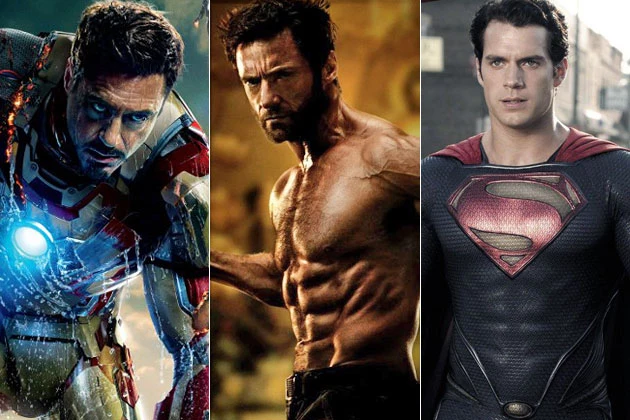
Great Responsibilities- the eventual death of superhero movies


       We have not seen a year without superhero movies since 2001. Since then, we have seen nearly every superhero have a franchise of their own, and several have had multiple franchises. And as of 2013, there is no end in sight. The end (at least for the time being) must be on the horizon. Film is suffering, audiences are suffering, and studios are setting themselves up for suffering- they might just not know it yet.
       The films themselves are weakening substantially. After The Avengers pioneered a sort of superhero extravaganza, which was incredibly entertaining, yet felt cheap, almost worthy of a two-hour special on ABC with all of the "special guest stars" and cheap narrative tricks, there is no new ground for superhero movies to develop. There are only so many ways to explore the consequences of a "great responsibility," and every angle has been explored multiple times in just the past five years. Good or evil, action or inaction, showmanship or humility, and countless more have been completed milked dry.
     Additionally, the films essentially are in two camps- the Marvel films, generally created for "cheap" action but packed with thrills and laughs (the Iron Man model), and the DC films, meant to serve "adults as well as children," lacking the humor  of comic books and attempted to dwell on deeper themes (the Dark Knight model). Man of Steel, released nationwide today, appears to conform to the latter model, but since I have not seen it yet, I can't comment on it. However, both models have serious downfalls.
      Marvel films are certainly more child-geared, which in itself isn't a bad thing, especially for the studios. They make boats of money, which more adult films cannot do. As a result, more adult-oriented films fail to receive studio backing, with the exception of those with Scorsese-like names attached. The Marvel films are the lesser problem. The Dark Knight model films deceive audiences, tricking adults into thinking that they are seeing a deep, thought-provoking film, when in reality they are seeing an action movie with "deep" themes tacked on top so clumsily, you can see the teeth marks made when the tape was ripped off the roll.
      Most adult audiences want both entertainment and stimulation, and the Dark Knight model films claim to offer both. But ultimately, the line between Iron Man model and Dark Knight model films is so vague, the same film is produced again and again. Last year's disastrous Amazing Spider-Man is the prime example. Not only has every theme explored in the film a carbon copy of Sam Rami's original work, it attempts to mesh the popcorn, neon-lit action of Iron Man with the foggy morals of Dark Knight, resulting in a total mess of a production. The film received a good share of praise, creating fear for the future of superhero movies. If meshing the two tones works, shouldn't that be the new norm- candy-coating action and brooding in one product?
      We are moving towards an atonal superhero movie, and the eventual crash of the genre. Perhaps the  film most likely to crash and burn is Justice League, with its needed massive budget, its handling of two "deeper" franchises- Man of Steel and the Dark Knight- and its promise of a mess of characters. If the genre does not fail, the films will certainly become less unique, and degrade to a cookie cutter formula. Already, there is very little new ground to explore in the genre. Over time, new areas will be created by the changing world, and superheros will be needed again, but the genre will soon be in a sad state.
     But will anyone notice the films are stale when they truly become the same thing over and over again, or will people flock to see a new version popular hero, even though the story and delivery is nearly identical to the last one? If the studios don't soon learn with the box office, they may never. We could be facing a grim few years cinematically, with studios willing to support originality less and less, relying on the safe, boring profits of the heros.

Edit: Just to clarify, I am speaking on adaptations of traditional superhero comic books. A History of Violence, Road to Perdition, and Ghost World are based on comics, but are able to really become their own, while I don't think Iron Man or Batman ever does. I'm sure there's a good amount of people who have no idea History of Violence is based on a comic, while even more obscure superhero comics can never break from their source material and become their own product.