That's right, eyeslice.com
I'm officially moving, and saying goodbye to blogger. I have opened a wordpress with a real url, eyeslice.com
Check me out there,
And smell ya later.
Saturday, November 7, 2015

Friday, October 16, 2015
Hollywood Representing Transgender: What's the solution?

In 2013, Jared Leto's performance is Dallas Buyer's Club netted him an Oscar for his portrayal of Rayon, a trans woman who suffers from AIDS and drug addiction. Despite awards and acclaim, some have called out the portrayal as a "Trans 'Mammy'" that will age poorly and a 'prop' that at least could have been played by a real trans woman. Of course, the backlash got its own backlash, with tons of people defending Leto and the filmmakers for the role and character of Rayon.
Despite some harsh criticism, Hollywood certainly didn't learn. Eddie Redmayne stars in this year's upcoming The Danish Girl, and has received the same backlash as Leto for playing transgender pioneer Lili Elbe. The Danish Girl isn't in theaters yet, so I can't speak about its portrayal of a transwoman and transgender topics. However, the casting of a cisgender actor again raises a lot of questions.
First, the criticism of Leto and Redmayne isn't exactly fair. They're playing a role, and they're doing it very well. Sure, the script has problems, but that isn't there fault. Leto is very good as Rayon, although I can see the insensitivity of some of his lines and character details. That's more of the script's issue than Leto's. But to be honest, Rayon *should* have been played by a trans woman. It's a role, but there needs to be some sort of authenticity. Blackface obviously isn't acceptable anymore, and I don't think a cis actor playing a trans character will be acceptable in the future.
However, look at this list of trans actors that could have played Leto's role. Obviously, none of them are as big as Jared Leto. I only heard of a very select few of the listed actors. Not a lot of people are going to see a movie because Laverne Cox is in it. Hollywood, point blank, is about making money. I could see a studio taking a risk on a role like Rayon in DBC- it's a supporting role, and Leto is already backed by stars like Matthew McConaughey. However, casting a relative unknown is a big risk, and Hollywood doesn't like to take risks of that nature. Movies like Dallas Buyers Club always struggle to make money, and independent producers can't take many risks when trying to make a profit.
So what's the problem? Is it Hollywood? Is it the public? It's a bit of both. Hollywood won't take a risk, because people want familiarity. They like seeing famous actors in roles like Rayon. If Eddie Redmayne was replaced by an unknown, I doubt many people would care about The Danish Girl. However, despite the gridlock between the public and Hollywood, something needs to change. Trans actors need to get more work and let their own artistic voices influence the depictions of trans people in media.
I think it will happen, but the process will be slow, and rooted in independent film. My favorite film of the year so far, Tangerine depicts trans women with humor, sensitivity, and above all, honesty. The film uses non-actors to great success, and quite frankly just would not work if cis actors were used. There are several other independent films that use transgender actors that catch on with niche audiences. Eventually, the jump will be made to mainstream film, and I doubt that Hollywood, and the public, will look back.
Tuesday, October 13, 2015
The Cubs are no punchline

The Back to the Future 2 joke is over. The Cubs aren't a punchline anymore. They are a really good baseball team. I'm a rabid Cardinals fan, and today, the Cubs eliminated the Cardinals- the team with the best record in baseball- in four games.
Honestly, the Cardinals weren't at their best. They were injured all year, and especially at the end. Their pitching was worn out. Stars Yadier Molina and Matt Holliday were clearly not right. But the Cubs dominated. And maybe this isn't the Cubs year, despite the prophecy delivered to Marty McFly. The Mets, Dodgers, and the four remaining AL teams are all serious threats. But it's unlikely the Cubs faithful will have to wait another 107 years for a ring.
The Cubs are built on their young position players. 2B (former SS) Starlin Castro has been around for years and is still improving. The team has three other young shortstops of the future: Addison Russel, Javier Baez, and Gleyber Torres (who has not reached the majors yet). It looks like Baez will move to second base, while Russel may go to the outfield. Some of them may be traded for pitching, further improving the stunningly talented Chicago team.
The Cubs offense is downright scary. Kris Bryant, Anthony Rizzo, and Jorge Soler round off the electric offense. But the worst part about it is that the oldest player is Rizzo. He's 26. That's right, he's not even at his peak. Catcher Miguel Montero is 32, but will soon be replaced by another young stud Kyle Schwarber.
It's easy to go on and on about their offense, but I've kept it short. They're great. They have power. They have depth. They have speed. And their offense isn't even their most talked about feature.
Jake Arietta has gone on an unreal tear, which likely will net him the Cy Young. Personally, I think it's just a tear, and he'll fall back to earth next year, if not during the playoff run. Regardless, he'll be a solid starter for years to come. Jon Lester, their big off-season acquisition, has performed as expected: he's an ace. The rest of their starters are solid: Veterans Jason Hammel and Dan Haren have been solid, although not great. Their bullpen has been a weak spot, although they delivered against the Cardinals.
What makes the Cubs truly scary is that they're in such a great position to improve. They have many pieces they could trade. They have money to throw at free agents like David Price and Zach Greinke. And they have the best manager in baseball.
Joe Maddon is a bastard. He orders players to be hit. He's a salty and arrogant, which makes him one of the best managers in the game. He plays hard, and makes tough calls without flinching. In today's Game 4 victory, he almost took out his starter after 2 innings. The situation didn't work out, and Jason Hammel stayed in, and even got an RBI single that at bat. But Maddon didn't hesitate.
Theo Epstein, who guided the Red Sox as they broke their curse, seems to have worked his magic again. They are aided by great draft picks and smart signings, and just generally great management. Between Epstien and Maddon, they have the experience to build a dynasty. The Cardinals and Pirates days of dominating the central are over.
However, anything can happen in Baseball. You could have written this article about the 2006 Mets, or even the 2003 Cubs, teams that fizzled and sent their franchises into years of mediocrity. The Cubs have all the marks of a special team, both in the 2015 Playoffs and for the future.
Sunday, October 11, 2015
"NOTHING BUT TROUBLE (Dan Aykroyd, 1991) and the beauty of the "blind watch"

Look at that above picture. Just look at it. That's all you should know about the unreal plot of "Nothing but Trouble" before you jump in and watch the 1991 horror comedy. It's a film I knew I needed to review, but didn't know how.
I simply don't know what to say about "Nothing but Trouble," which stars Chevy Chase, Demi Moore, John Candy, and Dan Aykroyd (who also wrote and directed). An incredibly obscure movie with four of the biggest stars of the day in it is an immediately terrible sign. I'm trying not to spoil the film, but I don't even know what to say from a critical level. The production design and the sheer oddity of it makes it worth the time spent watching.
Before I watched it, I only vaguely knew of it's existence. When I saw it at the New Beverly as a part of a very strange double feature (this and Haunted Honeymoon another horror comedy flop), I only knew the stars and the fact that Aykroyd is in old person makeup. Honestly, the film isn't good by most means, but it's ridiculously strange and entertaining. I don't understand how it was even made.
At the heart of Nothing But Trouble there's a lot of imagination in its set design and the oddity of many of the characters. Demi Moore and particularly Chevy Chase are barely characters at all, just playing their familiar selves. After they are arrested in a former mining town in Pennsylvania, they are placed in the custody of an ancient judge and a grotesque town. People perform in heavy makeup, genders are swapped, and there's a special musical guest. That's already bordering on too much information.
The film bombed upon release, and was universally hated. Not only is it incredibly goofy at times, its also can be dark and gross. There's poop jokes, deformed mutant-things, and literally thousands of dead bodies. It's easy to see why it was so hated, but it's so strange and goofy. At the end of the day, it may be a train wreck, but it's impossible to look away. Sure, the plot falls apart at the end, but it's still entertaining as hell. The oddball performances and strangely detailed and inspired set design make it totally worth watching.
I think if I knew more about Nothing But Trouble I wouldn't have enjoyed it nearly as much. I probably wouldn't have seen it at all. I think the best way to watch a movie is going in with as little information as possible. Most of the time it isn't practical, but it's easier and cheaper than ever with Netflix, although it's also easier to learn everything you want to know about a film. I know a lot of people that need to watch a trailer before seeing a film. And it makes sense, as two ours is a lot of time to devote to something that may be pointless.
Trailers are also how people learn about movies of course. With Netflix, YouTube, and everything else, it's easier to find both great movies and ridiculously horrible movies. It's important to know if the movie's tone will fit you and if you will likely enjoy it. I like watching trailers in the theaters- knowing if I should spend $12 on movie at an AMC or something- but I love getting a movie recommendation from a friend or putting on something with an interesting plot summary on Netflix.
Besides going with my gut and friend's recommendations, I love going into a movie blind after hearing about it from a critic or another source. The New Beverly Cinema, with its films hand selected by Quentin Tarantino, is a great source of entertaining and odd films, many of which are forgotten. If I hear that a movie is good, I'll just wait to see it instead of watching a trailer. My favorite film so far this year is Tangerine, and I saw it without knowing anything about it. I think part of the reason I loved it was how unexpected it was, and how every twist and joke was fresh.
Watching a movie blind is a gamble, but for me, there's a huge payoff. Sure, you may be disappointed and unsatisfied with the movie. But it makes the film more effective in a lot of ways. Everyone has ben mislead by a trailer or crushingly disappointed anyway, so with no information, it's easier to have no expectations and allow the movie to just prove itself. If the movie's great, it can be a great feeling, and even if the movie's bad, like Nothing But Trouble you allow yourself to be shocked and even more entertained.
Thursday, October 1, 2015
Where I've Been and stuff
Although I posted last week, I really haven't been active on this blog. Honestly, I didn't think anyone actually read this, but the website metrics say I'm getting viewers all over the world. It's probably an army of spambots, but I still appreciate it.
I don't usually talk about myself on here. It's mainly because I'm not that interesting. However, I guess I'll bring everyone up to date. I graduated from Temple University in May, and moved to Los Angeles. As you can tell, film is my passion, and I'm trying to break into the industry while working on my writing. It sucks. Really, it's hard, but I'm making it work.
I've kept writing on a few different sites. I've been logging all of the films I've seen and write shorter reviews on letterboxd.com. I've also started writing for redcarpetcrash.com. I'll post some links to my best reviews. I'm trying to tweet more.
I'm going to keep writing for this blog, but I'm going to change up my content a bit. I'm going to move away from reviews for the blog, and start talking about general film topics, as well as news, sports, and other newspaper sections. So thanks for reading, spambots.
I don't usually talk about myself on here. It's mainly because I'm not that interesting. However, I guess I'll bring everyone up to date. I graduated from Temple University in May, and moved to Los Angeles. As you can tell, film is my passion, and I'm trying to break into the industry while working on my writing. It sucks. Really, it's hard, but I'm making it work.
I've kept writing on a few different sites. I've been logging all of the films I've seen and write shorter reviews on letterboxd.com. I've also started writing for redcarpetcrash.com. I'll post some links to my best reviews. I'm trying to tweet more.
I'm going to keep writing for this blog, but I'm going to change up my content a bit. I'm going to move away from reviews for the blog, and start talking about general film topics, as well as news, sports, and other newspaper sections. So thanks for reading, spambots.
Saturday, September 19, 2015
Popeye (Robert Altman, 1980)

I don't even know what to say about Popeye. It's definitely one of the strangest films ever made. It's an adaptation of the Popeye comics and cartoons, which I never really enjoyed, and it's clearly faithful to the cartoons in tone and style. It's also a Robert Altman movie, and it's clearly a Robert Altman movie in its tone and style. It just doesn't make any sense how this would work together, and it doesn't.
I always thought that Popeye was pretty boring when I was younger. It's definitely a different style than Warner or Disney cartoons. The cartoons move at a pretty slow pace. There's a lot of build up to jokes and repeated animation. They just felt a lot cheaper than Disney and Warner cartoons (because they were), but they were very popular. I think they haven't really stood the test of time like Looney Tunes, but they remain somewhat popular with a new movie coming in 2016. Altman is incredibly faithful to the cartoon, almost to fault. He mimics how cheap the cartoon felt. Need to animate a village? Let's just show 15 people. Need a bunch of kids? Get 10 random kids, adding the charm of Sweethaven, a town with a crippling street urchin problem for only one scene.
Altman's strange, strange comic book adaptation captures the cartoon's style in a lot of aspects. The acting is all quite strange and animated- which is its intention. It's the closest to live action animation I've seen. However, it's live action cheap animation. Robin Williams and Shelly Duval are excellent, although some of their lines just don't work well in live action. In one scene, Olive Oyl gets scared by the very mention of Rattlesnakes, and hops up onto a rock, where she shrieks "Rattlesnakes! Oh Rattlesnakes! Rattlesnakes!" for at least ten seconds. It's probably one of the most irritating things ever put onto celluloid. I wasn't actually watching it on celluloid. I watched it online, so compared to all of the irritating things put online, it's really not that bad.
I think that rattlesnake scene is a good example of the film's problem, where it fails to be a good Popeye movie or a Altman movie. That scene works in a Popeye cartoon: Olive's shrieking with some goofy old music playing. But here, no music is playing, and it's just Olive's shrieking, made even worse by Altman's characteristically poor sound mixing. At times, the film perfectly matches the style of the Fleischer cartoons and the comic strips, but other times... it's Robert Altman. The film has gritty cinematography and muted colors, incredibly atypical for a cartoon adaptation, and even stranger considering everyone still *is* a cartoon. In the middle, Popeye fights a championship boxer. The color is muted, and it looks like its a scene from a gritty underground boxing movie or something- until you look at Popeye's goofy squint and giant forearms.
The opening is the same way. After opening with an old Popeye cartoon and Popeye announcing that he's in the wrong movie- a pretty cute, though at this point rather lame gag- we get a very Robert Altman opening. When you think Popeye movie, I'm sure you think of an eerie, silent opening of a ship bobbing in the sea, right? That's what I think of! I also think of charming classic Popeye moments like Popeye walking into a whorehouse with an incredibly seedy looking prostitute who's clearly on something strong, crawling around in the corner. I didn't make a word of that up. Popeye actually warns Olive about not getting a venereal disease, I swear to God.
This movie is so pants-on-head crazy, that I didn't even mention the craziest thing about it. That's right, I talked about a Popeye movie for quite some time, and didn't even mention that it's a musical. I guess there were some songs in Popeye, but I only remember the title. I don't think of Popeye as singing. I also don't think of Shelley Duvall singing.
Let's just get this out of the way. I love Harry Neilson. I really do. But these songs are really, really, really horrible. They're probably the worst musical songs I've ever heard. "Everything is Food" is probably one of the downright worst songs I've ever heard. I know some people like this soundtrack. I just can't see how. The songs are mainly the characters saying the same thing again and again and again, with what sounds like a Casio preset playing in the background.I have zero musical talent, and I think I could write the music and lyrics for something pretty similar. I could probably write "I'm Mean" too, although I couldn't sing like Bluto. His voice is pretty awesome. I admire Altman a lot for taping the audio live, but a lot of the time it's just awful. The chorus sounds flat and amateurish. The process does Shelly Duvall no favors at all, and Williams is pretty uninspired as well.
There's a lot to admire in Popeye. Altman was certainly ambitious in handling a comic book and old-time cartoon in a way that mixed his signature style- naturalistic, honest performances, the use of quiet slower moments, and the ensemble cast- with such overtly goofy and over-topic characters and cartoon visuals. That's what makes the movie so strange and sets it apart from literally everything else.
The clash of Altman's and Popeye's original styles just took me out of the movie and just had me constantly questioning what the hell I was watching. However, I think it's worth checking out if you're a fan of Popeye or Robert Altman. Even if you're not particularly fans of either, it's such an oddity that it's worth checking as a total oddity of cinema and the end New Hollywood.
Monday, July 7, 2014
ESCAPE FROM TOMORROW (Randy Moore, 2013)

It took me a little longer than I would have liked to see Escape from Tomorrow. I knew it about for a while. I had chances to see it. Hell, it was on Netflix for a while. It enticed me by its guerrilla filmmaking and use of Disney property. However, it seemed like a movie that only existed for that purpose. There was nearly no way it could actually be a good movie, right? I expected to see some fragmented looks at Disney, that was all. Some weird camera work, making fun of the mouse, and that's it. But, to my total shock, Randy Moore, in his debut film, didn't just make a good film, but made a great one, despite its flaws.
Moore captures the hyperreality of Disney World that Jean Baudrillard discusses in Simulacra and Simulation. Disney World, Baudrillard argues, is a simulation of something that never existed- the perfect town in the perfect country where the perfect family can visit. This is key to understanding the complex hilarity of Escape from Tomorrow. Often, the film is incorrectly labeled as a horror movie. In fact, it's poster- Mickey's glove dripping blood- captures audiences and takes them on a totally unexpected ride. Jim, the film's struggling father, witnesses his world fall apart in Disney World, where his wife, children, and the Disney icons all seem to taunt him, and the entire world seems against him.
Clearly, much of the film isn't real.In fact, we don't know what is real, and what is a product of Jim's imagination. Although this is fairly common in film, even mainstream film today, Escape takes it to a deeper level, with only a few sequences in the film clearly being a part of the absolute reality. Escape can best be described as a David Lynch family vacation.
The film in't perfect, but what film is? Some things don't work, like the bizarre scene nearly an hour into the movie where strange science fiction elements are introduced and soon abandoned. Perhaps with better special effects the scene would be less goofy and out of place, but it serves its purpose and builds on the madness of Jim's world. The black and white digital photography is unexpectedly gorgeous and terrifying at the same. Because of it, we are constantly aware of the bizarre nature of the film. We aren't supposed to see Disney World in black and white. Disney World is color. Moore manipulates the park's surroundings, getting uncomfortably close and twisted with It's a Small World and superimposing naked women onto Soarin'.
Technically, the film is just stunning. Anyone who is vaguely familiar with Disney will be floored that they could shoot full length scenes. The film contains multiple scenes, with full scripted dialogue, on the rides. Escape could exist solely because of Moore's ballsy feet, but instead, the film is all-around well crafted.
Many criticize the films ending, claiming it makes no sense. However, when taking it with the hyperreality and the impossibility of a perfect existence- both for the world (or Disney World) and for Jim- the ending excels and ends the film on a perfect note. Although the final shot of the French teen fairies seems ridiculously out of place, given the somewhat grounded existence of the teen girls, it is forgiven after the excellent end sequence with Disney, or D(beep), hiding their park from the realities of life and seeming to create a perfect memory for the imperfect family. In many ways, Escape from Tomorrow just has to be seen to be believed, but it's more than the shock of the perversion of the brand. The film disassembles the magical fantasy of Disney, leaving behind the skeleton of a nightmare.
Monday, June 30, 2014
OBVIOUS CHILD (Gillian Robespierre, 2014)

I'm really, really fighting the urge to make a joke on Obvious Child's title to lead off the article. By that, I mean that most of the film, of course, is pretty damn obvious. It's exactly what you would expect from an Indie Romantic Comedy, besides, you know, that abortion thing.
Obvious Child, the feature film debut of Gillian Robespierre, is largely hit and miss. A lot of the humor misses, but the film's heart and handling of a ridiculously touchy topic is where it succeeds. Jenny Slate delivers a fine performance, although she is weighed down by fairly typical "quirky" jokes about farting and inappropriate comments. In 2014, it's pretty familiar, but not quite yet tired. Slate carries the film completely as Donna, and shines during the emotional climaxes: Donna's conversation with her mother, and the final stand-up routine, which honestly, isn't... really funny. At all. Sure, in a filmic sense the scene works as she confronts Max, the business man who impregnated her, her insecurities, and her apparent stage fright, but the audiences guffawing actually becomes distracting.
The film handles Donna's complicated relationship with Max in a somewhat unique fashion, although it still neatly hits the conventional ups and downs of a romantic comedy. Max isn't really given a lot of dialogue, but Robespierre perfectly characterizes him by his fashion, sense of humor, and actions, most importantly his handling of Donna's abortion. The abortion is dealt with in a decidedly modern manner, completely refusing to moralize the decision, a route many films would take, and even sparing us the convention of Donna changing her mind. It's the modern world. Donna can't have a child. She knows it. Sure, there's some weight attached to the decision, but there are no last minute revelations. Donna's relationships through the film are all shaped by her decision, but in Obvious Child, all are supportive and encouraging.
Despite Max being a 'good character,' the film certainly suffers through the conventions of the romantic comedy. It seems strange how liberated Donna is in the film, yet the film its self is tied down to flat out boring romantic storytelling. The conventions are all there: Donna struggles in her job. She loses her boyfriend, and we are subjected to a scene where she waits outside of his door, counting sips in her coffee. The supporting cast is fairly generic. However, Gabby Hoffman is quite good in the "best girl friend" role. The scene where Donna waits on the pregnancy test while Hoffman's Nellie pees on the toilet is hilarious- until its shattered by another maddening indie rom-com convention, where Donna imagines herself as the DJ, and visualizes stylized flashbacks.
However, the absolute worst part of the film is the borderline offensive inclusion of the "gay best friend." The gay fellow comedian is a by-the-book gay stereotype that's ridiculously outdated. It's absolutely strange that such a character, who can barely say a line without mentioning how gay he is, exists in a film that is otherwise so modern. The gay best friend is only in a few scenes, but is always there to point out how hot Max is, or how shocked people would be if he was pregnant! Because he's gay! Get it!?
Robespierre's debut is certainly interesting, flawlessly taking on a incredibly difficult subject, and manages to find the humor of it, as well as the emotional core, all while refusing to moralize the situation in any way. the films flaws lie not in its tackling of the abortion, but in the secondary plots, relying on boring, even offensively boring, characters, and ultimately ending the love story on a weak open-ended note. However, despite the criticisms, Obvious Child earns its title as the Indie Comedy of the season. Robespierre makes an exciting debut, leaving me very excited for her future as a filmmaker, and boats a potentially star-making performance of Jenny Slate, although she should be lauded more for the dramatic performance than the comedic.
Wednesday, January 15, 2014
12 YEARS A SLAVE (Steve McQueen, 2013) Stars and Representation

Director Steve McQueen examines the brutality of slavery in a frankness that is rarely seen, especially in somewhat mainstream films, not softening the subject matter by using a “point-of-entry” white character or neglecting the more frightening sexual truths of slavery. McQueen, a black British filmmaker, used his status as an outsider to American culture to examine it more explicitly and refuse to lighten the tone of the film and show slavery in a less real and brutal light. McQueen’s film uses several recognizable actors and utilizes their star power for a unique effect of warping our expectations for the film. One of the uses is highly effective, unsettling and shocking the audience at the beginning of the film, while the other use of celebrity at the film’s end seems much too safe and predictable to be effective in the discussion of slavery.
Early in the film, soon after Solomon Northup is drugged, abducted, and sold into slavery, he talks to two other slaves while being transported to be sold. One of the slaves is played by Michael K. Williams, a highly recognizable actor who won several awards for his portrayal of Omar Little on The Wire. William’s character talks about starting a revolt and escaping from the ship, and seems to be willing to assist Solomon on gaining his freedom, going against the other enslaved man’s pleas to be quiet and focus on surviving. However, William’s character is stabbed to death after a few brief minutes of screentime, a shockingly brief role for such a well-known actor. The actor’s brief role and quick end reflect many of slavery’s horrors to a modern audience and mirror’s Solomon’s introduction to the slave trade. The possibility of death is real and can happen suddenly by the hand of a displeased slave owner. Solomon begins to see that he cannot simply convince a slave owner that he is a free man, but must attempt to keep his head down and avoid arousing suspicion, but Solomon has no desire to forfeit his dignity, like the other man on the ship who greets his master with praise and affection. The death of a recognizable actor relays the very real possibility of death Solomon faces to the audience watching the film, and forces them out of their comfort zone and shatters their expectations. From that point on, Solomon’s situation takes on a new reality that is often not seen in “mainstream” cinema.
Towards the end of the film, Solomon encounters Samuel Bass, played by Hollywood star Brad Pitt, a Canadian who vocalizes his disgust with slavery. Solomon is reluctant to trust Bass with delivering a message to his friends in New York, since a white man betrayed Solomon earlier. The first man, a field hand, was played by a relatively unknown actor, and thus the shock of the portrayal is not as great as it would have been if a star like Brad Pitt, who made a career playing the Hollywood “good guy,” turned in Solomon to the plantation owner. Solomon eventually opens up to Pitt, and Pitt’s character alerts Solomon’s family and friends, ultimately leading to his freedom. The fact that the film’s biggest star, albeit in a very brief appearance, allows Solomon Northup to regain his freedom seems almost too neat and convenient in a depiction of slavery. The film would have been much more suspenseful and effective in communicating the savagery and confusion of slavery if Pitt played the field hand who betrayed Soloman, reinforcing its communication of slavery’s brutality and destroying the audience’s comfort. Many expect a star like Pitt to show up and save the day, which he ultimately does. Shattering expectations set by years of Hollywood tradition would have created a seemingly harsher depiction of slavery where no one, not even Brad Pitt, is able to be trusted.
Monday, January 13, 2014
GRAVITY (Alfonso Cuaron, 2013) Experimentation and sound

Note: Originally written as a short post for a experimental video class.
Alfonso Cuaron’s Gravity contained a surprising amount of experimentation for an $80 million Warner Bros. film. First, the film features just two actors, and focuses mostly on Sandra Bollock’s character, completely isolating her for the bulk of the film. Although the two actors are two of the most bankable stars working today, the film toys with audience’s expectations greatly, removing George Clooney from the film around the halfway point, leaving Sandra Bollock, the lesser of the two personalities (both off-screen, and even on-screen, as Bollock’s character is nervous and soft-spoken, unlike Clooney’s charismatic natural leader) to carry the rest of the film.
Cinematically, the camera flows loosely through the film, flipping with the characters sometimes, and other times locked onto them. The film begins with a seventeen minute long take, guiding the viewer through space, starting focusing on the different angles of the ship, alerting us to the subjectivity of direction and orientation in a zero-gravity environment.
The film’s most fascinating, and ultimately most frustrating, aspect is its use of sound, based heavily on how sound acts in space. Unlike the traditional space film, explosions, destruction, and movement make no sound on the film. The film’s promotional trailers actually include the typical booms of explosions in space. The film’s microphone seems to be within Bollock’s helmet, providing some noise to the environment- beeps from her oxygen tank, hisses, breathing, and radio cracks. The use of sound here works thematically and aesthetically- the film is about Bollock and her experience, at one point even using a hallucination, so it makes sense that we hear what she hears and not the harsh “true silence” of space. In a climatic scene, Bollock struggles to enter a ship while her surroundings are destroyed by space junk. We hear Bollock’s panicked breathes and some whirring, but not the typical booms and crashed.
However, in that scene, and many others throughout the film, we hear a loud orchestral score, there to soften the film’s tone and make it more conventional. However, the score takes away from the power of the image and the originality of the environment. It would not surprise me if some people didn’t notice the film’s lack of booms and crashes because the score was so overbearing and conventional, even though the rest of the film seemed to defy convention.
Friday, January 10, 2014
HER (2013, Spike Jonze)

Well, it seems that I ultimately broke my promise of regular writing on here, but now it's time to remedy that. Last night, I saw a film I badly wanted to see for some time, Spike Jonze's "Her." Jonze directed several great films, yet he is rarely seen as a great director. Part of this problem is because his first two films were written by Charlie Kaufman, a bright and original voice that dominated the films entirely. "Being John Malkoich" and "Adaptation" are much more owned by Kaufman than Jonze. His third film, the dark adaptation of the children's classic "Where the Wild Things Are" drew equal acclaim and criticism, yet I believe it is fairly good. In many ways, Jonze had a lot to prove with "Her," which already gained critical acclaim elsewhere.
It many ways "Her" is very similar to Paul Thomas Anderson's "The Master," a film that split opinions yet instantly won my heart. Joaquin Phoenix and Amy Adams star, and are stellar as always. The film deals with heavy topics, such as the nature and the need of human relationships, and ultimately asks what it means to be human.
The difference is, really, that The Master was about something. It had a story that could be understood, and we could relate to, even though we do not understand the inner-workings of a cult. We see the relationship between Freddie and Dodd with clarity, and it makes total sense. The central relationship of Her, does not work. Unlike pretty much every other film relationship, it's not a lack of chemistry, because Samantha, the Scarlett Johanson voiced OS, is seemingly designed to mesh with the nerdy and repressed Theodore. Her just makes no sense in design.
Spike Jonze had the ability to essentially make up logic for the innerworkings of the film, and failed to produce a believable and sensical product. Yes, the film is supposed to raise questions on what it means to be human, but really, he doesn't give any answers. The premise itself is as thought-provoking as the entire film, and at points, it feels like Jonze is making things up as he goes along. You can almost hear Jonze yell "Fuck it!"when Samantha begins to evolve quickly, ultimately becoming a 'greater being or something like that shit.' What the scatterbrained approach to the story and logic indicates is that Jonze just couldn't control the film, couldn't confront his techno-philosophical questions, and really, the film just isn't well written. "Her," could have been great, honestly, and part of it is there, clearly and passionately, but it doesn't come together at all, and crumbles in Jonze's hands, making me really wish someone like Charlie Kaufman could have helped him out with the story.
Her, at the end of the day, just didn't click with me at all, in such a powerful way that I fear it could have just been me not having the right mindset, and in a way that warrants a revisit. The acting was superb, and the cinematography, which is being universally praised, didn't completely work for me either. It seemed much too cold and manufactured, which betrays what I felt Jonze was attempting to do with Samantha and Theo's relationship, another baffling inconsistency that trapped and puzzled me. The nature scenes, with ample lens flares and overexposures reeked of modern indie cliches.
But like most films, Her lived and died with its story, which was unable to get past the logistics of such a complicated premise, ultimately making no sense, and ending with a quick and ridiculous ending that completely soured the entire film. This was Jonze's ultimate "fuck it" moment, and he felt the need to give us a simple analogy to explain Samantha's thought and her need to develop, but not any explanation for whatever the fuck was supposed to happen. Her, like The Master, relied heavily on analogies and symbols for the human experience, but was unable to root its heavy symbolism and overall 'importance' in anything at all, resulting in a film that either falls apart or floats away. Either way, nothing is really there.
Sunday, December 15, 2013
Return
After a long, long, long absence from my invisible, but hopefully existent, readers, I have promised to return, and on a more permanent basis. I was caught up in work- both school and personal projects, and rarely had time to add anything here, spare one or two posts.
First, I plan to post regularly again, on the same schedule, and then on a still regular, but less frequent schedule come February. I have a few articles lined up and ready to go that are republishes from classes, but I certainly will put out some totally fresh pieces. I haven't been totally caught up on many new releases, but I have seen a few, and hope to get even more filled in during the next few days.
First, I plan to post regularly again, on the same schedule, and then on a still regular, but less frequent schedule come February. I have a few articles lined up and ready to go that are republishes from classes, but I certainly will put out some totally fresh pieces. I haven't been totally caught up on many new releases, but I have seen a few, and hope to get even more filled in during the next few days.
Second, I hope to share some video work of mine, since up until this point I have kept my writing and video separate. I have a few things to present that are lined up and finished, a project that I am currently editing that I am already quite proud of in many ways, and I plan to release by mid-April at the absolute latest, and a screenplay that I am fine-tuning and may shoot over the next month, although that could fall through of course, and even if it is shot, might not be complete for some time. Additionally, I am working on a few different screenplays of various quality, although I doubt f any of the features will be available through here, at least not before production.
I hope to follow through with these goals and promises, and I want to thank anyone out there that reads this, and especially if you appreciate my work.
Friday, September 27, 2013
BLOOD BROTHER (Steve Hoover, 2013)

Documentaries are starting to have a real problem: They're all the same. Most directors prefer to stay a certain distance from their subject, even if they have every reason to move closer. I wouldn't be surprised if there was a secret committee who only approved of one type of documentary, forcing 99% of them to have the same construction.
Blood Brother is a movie that's probably going to get a 98% on Rotten Tomatoes. Like most social documentaries, who wouldn't like it? It's a great story. Rocky Bratt, a somewhat troubled young American, goes to India and finds himself loving his life at an HIV orphanage. Bratt really engages with the kids, gets his heart broken nearly as often as he succeeds, and loves the country in general.
So what's not to like? The film seems empty, in a word. The entire opening is Rocky doing nothing in particular in America. The footage is great, but assembled in such a way that I don't know what the aim was? Rocky? The kids? Rocky's relationships? HIV? It's just bogged down, and deemphasizes the kids in such a way that it falls dangerously close to the "White Savior" treatment.
The film's structure is just odd, having the imprint of a traditional narrative, but ultimately cannot put it all together. It's like a few strips of tape were slapped over the entire thing. Rocky is the only true character in the film. The kids are like props, occasionally being brought out and held up to the camera. The frustrating thing is that we certainly see enough footage that could really illustrate certain children and bring them to the spotlight. The one boy, who gets dangerously sick towards the end, is said to "always be around" yet we see him twice- in his sloppy introduction, and when he's near death.
The music, combined with the editing, adds another depth of irritation to the film. The mythical Documentary Committee I mentioned earlier apparently only approves of films that have a few "happy" montages of people dancing and running, and scored by a strummy string quartet piece. If we're having a flashback, better have some animated sketches.
Documentary has really become flavorless recently. Sure, there's exceptions that really try to do something interesting and "represent the truth"in an honest and engaging way- I'm thinking along the lines of Restrepo, Exit Through the Gift Shop, Smartest Guys in the Room, Inside Job and Waltz with Bashir. But the vast majority seem to fall under the vanilla production line aesthetic of Jiro Dreams of Sushi, Hell and Back Again, and now Blood Brother.
The real tragedy of Blood Brother is not just that's its bland, typical, and out of focus, it's that it could easily be good. There are editors and directors that could take the innumerable hours of raw footage shot and make something truly engaging, intelligent and downright interesting. If Blood Brother told a bad story, it wouldn't be as infuriating as its end result: A good story told in a bad way.
Wednesday, August 28, 2013
BLUE JASMINE (Woody Allen, 2013)

Woody Allen has recently been quite hit-or-miss, but he truly makes whatever he wants, be it dramas (Match Point), vignettes (To Rome with Love) or experimental narratives (Melinda and Melinda). However, really nothing he has made has been terrible. Allen's last massive success was Midnight and Paris, a wackily set human comedy that drew great attention for its historical aspects, even though it had some weaknesses.
However, with Blue Jasmine, Allen scores his best film in some time, and truthfully, one of his best period. Cate Blanchet's performance is simply unreal, and without a doubt the highlight of the film. It actually becomes uncomfortable to watch the nervous breakdowns of Jasmine about her state of life, relationship issues, and unsure future.
Forced to move in with her sister after her husband is imprisoned for financial fraud a la Bernie Madoff, Jasmine moves to San Francisco, claiming she's out of money despite her first class plane ticket and refusal to sell her designer clothes. Alec Baldwin, in flashback, plays Jasmine's husband, and Baldwin may be the weakest link in the film. Not because of his performance, but simply because of his underutilization. Baldwin doesn't do anything in particular, but really, this is an issue that only arises in retrospect.
Great performances dot every minute of the film. Sally Hawkins is brilliant as Jasmine's meek "lower-class" sister. Bobby Cannavale is great as her current boyfriend, while her fling is portrayed by Louis C.K., who is good enough to not be completely distracting. However, the best performance in the film is by Andrew Dice Clay, the critical scorned abrasive comedian, as Jasmine's ex-brother-in-law, resentful towards his entirely family and emotionally reeling both times we see him- first trying to fit in with Jasmine's high society, and then hurt financially by Baldwin's money games. Michael Sturburg is both pathetic and unsettling as Jasmine's temporary employer.
Allen structures the film in a certainly peculiar manner, abruptly changing from past to present. In fact, I was lost for a few seconds in a time change, although I quickly recovered and dove back into the film. Allen creates an interesting tone as well, mixing emotionally raw drama with dry humor, kind of like his typical style mixed with Cassavetes. It's a unique blend, and one I can't think of having seen before. Unflinchingly, I would declare Blue Jasmine as Allen's best film since (at least) Hannah and Her Sisters, which is no small feat, considering the strengths of Match Point, Mighty Aphrodite, and Midnight in Paris. Allen creates a very real portrait of modern emotional turmoil with Blue Jasmine caused from betrayal, snootiness, and culture shock.
Monday, August 26, 2013
Spike Lee- Power through Freedom

Currently a hugely controversial figure for his commentary and actions, Spike Lee is, for some reason, hated on the internet, although really, they should love him. Currently, it's hard for me to think of a filmmaker whose voice through his films is so loud and consistent throughout his body of work. However, that's not saying every film is the same, in fact, the truth couldn't be further from that.
Lee's real-life, and thus cinematic, home is Brooklyn, and thus most of his films are not only set there, but reek of the attitude and life of Brooklyn. Lee got his start from independent filmmaking, and despite a relationship with Universal Pictures, has remained very much an independent filmmaker, denying the industry of content that would typically be consumed by the masses. Because of this, the "controversy" the internet brewed over his kickstarter is particularly absurd. The internet seemed to have zero problem with the Veronica Mars movie, even though that was being made by more people and asked for much more money. Lee has stated that he crowd-funded before Kickstarter existed, and that is very much true. 2012's Red Hook Summer was self-funded, and the film is truly very good.
However, RHS, like much of Lee's work, features a trademark of his style some would see as a weakness- his pacing is a bit odd, and some aspects of the story are rushed or simply forgetten. FOr example, the revelation about the reverend in Red Hook Summer comes out of seemingly nowhere, while a building of a ten-year marriage of Bleek and Indigo in Mo' Better Blues is rushed at the end, allowing the story to end in a cycle, a neat technique but one that isn't needed.
Lee is one of the rare modern filmmakers who constantly feels the need to innovate and experiment with his work, adding in odd camera angles and story structures. Perhaps one of the best example of this appears in Mo' Better, where Bleek calls the two women in his life by the others' name. the scene is shot as if they were in the same room, with Bleek turning different directions to address the different woman.
Lee's career can be best defined by two films- Do the Right Thing, which I previously discussed at length, and Four Little Girls, a powerful documentary about the bombing of the Birmingham Baptist Church at the peak of the Civil Rights Movement. Lee understands this to a degree. After DtRT, Lee made MBM, certainly a good film, but far from the sprawling, powerful, and poignant the preceded it. Lee's career may have been in jeopardy if he followed Do the Right Thing with Jungle Fever, a similarly themed film that pales in comparison due to some hokey and goofy moments, despite some really great scenes and powerful performances.
Lee does not get the reputation he deserves, often just criticized for controversial statements. Lee currently takes heavy heat because of his remaking of Oldboy, an inexplicably popular Korean film with a cheap, stupid ending. Even if one likes the original film, one should realize that it's not an unbridled masterpiece, and how interesting it would be to see Lee tell the story in his own way, with his own characteristic flair
Friday, August 16, 2013
MEDIUM COOL (Haskell Wexler, 1969)
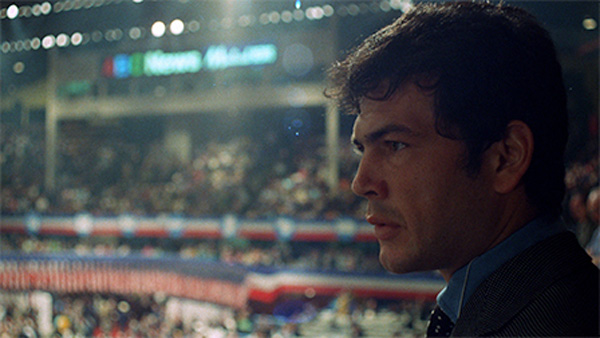
Hollywood, eternally five years behind culture because of long production schedules, finally caught up to the social revolution in the late 1960's, birthing the New Hollywood movement with films like The Graduate and Easy Rider. Haskell Wexler, famed cinematographer, decided to get to the heart of the issue of America and start a revolution in film at the same time. The film tells the story of a devoted and moral cameraman, John, who is placed amongst real footage.
Medium Cool revolutionary technique was fictional use of cinema verite, blended with real documentary footage that aided the plot, as well as Easy Rider-esque editing and structure. John attempts to get the footage he wants to shoot, not the footage his unscrupulous boss desires so it can be sold to the police and FBI.
The film bluntly states its mission in one of the earliest scenes, which is a long, documentary styled sequence in which a party discusses the merits of television as a medium and the moral responsibilities of a camera man. The opening shows John and his sound cooly looking at a highway wreck, and only after getting footage so they call the police. At the film's abrupt conclusion, we are once again presented the situation. However, Wexler does not give us an answer explicitly, as we must find our own. Should a cameraman be more camera or more man?
The first half is John operating as a camera, going to various locations and filming what he is assigned. However, his humanity undercuts everything, forcing him to focus on a human interest story of a black man who returns money found in the cab. The story is unpopular with the man's friends, who see him as interested in the man because of his race and accuse John of attempting to make a circus out of the act ("Human Interest? Are humans going to be interested by us, or we humans?") while John's television boss finds the story bland, and eventually fires John.
The next half shows John's humanity, undercut with his profession. He falls for a woman, Eileen, with a young son, Harold, who he cares deeply for. John takes a break and falls in love with Eleen, although he stays interested in society. One incredibly scene involved shaky, free footage of a hippie nightclub, using bright colors and odd cuts in harmony.
The film's most memorable scene is the very end, in which Harold runs off while Eileen looks for him amidst the Democratic National Convention Riots. While Eileen is there, we see real footage of police brutality. Wexler predicted a riot at the convention, yet not the fact the police instigated the incident. The riot sequence is more a historial document that a part of the film's narrative, though it feeds the environment and tone of the film. It is edited in such a way that we never forget where we are: The convention, yet still with Eileen. The plot still lives even through the reality of the footage, a feat nearly impossible to pull off.
However, Medium Cool is mainly remembered as a time capsule rather than a work of film. Truthfully, I admire its structure greatly, as well as the risks it took. The film succeeds at its ambitious reach, standing as both a history and a work of art.
Tuesday, August 13, 2013
LIFEBOAT (Alfred Hitchcock, 1944)
I must apologize, non-existent readers, for missing a few days. I'll be busier now, as I'm returning to University in a few days, but I'll try to keep up. And what a way to get back- Hitchcock's birthday. I figured since I looked at Bunuel (and hopefully I'll look at his films one by one soon) I should cover old Hitch, a director everyone should admire. Covering all of Hitchcock is too much, so for this week I'll look at a few of his films, starting with one of his strangest and weakest.
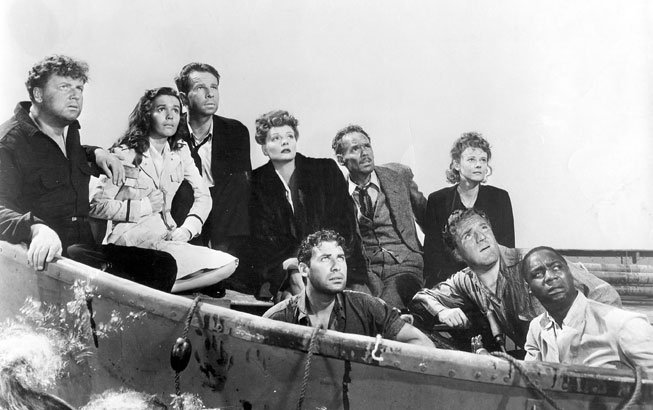
Lifeboat instantly had me hooked with the premise- survivors from a WWII attack are stuck on a lifeboat, and take on a German from the U-Boat that sunk them. Hitchcock utilizes the limited setting well, as one would expect, allowing us to grow attached to the characters and the setting. The film is well directed and shot certainly, like all of Hitchcock, but surprisingly it feels bare, and even downright ugly under the surface.
Perhaps the biggest problem lies in the script, based on a story by John Steinbeck, although the acclaimed novelist was supposedly displeased by the adaptation. The film is solely a product of its time. Bill, the African-American man on the boat, or portrayed as a weak stereotype, forever grateful to his white saviors. Even for the forties, where a modern audience needs to have some patience with stereotypes on screen, its exhausting and off-putting.
But the biggest issue is even more of a remnant- the total villainization of Germans. The U-Boat captain is simply an evil twisted man, but is meant to resemble all Germans in an incredibly ugly caricature. The Captain attempts to steer out boat directly to his own ship, leading all of the survivors into capture, and freeing himself, and also hoards water from the others. The film concludes shockingly, as the survivors straight up beat the man nearly, if not completely, to death, throw him off the boat, and bash him with an oar to prevent him from boarding.
However, the ugliest and most dated scene of the film is when the lifeboat is spotted by a Nazi ship, which is soon bombed. The lifeboat picks up another German, a young sailor, who draws a gun on the survivors. Now, doing this is not only pathetic, but also cowardly, further bringing down the reputation of the German in Lifeboat. And of course, the German in ultimately weak when confronted, seen when the survivors strip him of the gun easily, leaving his fate to them as they swarm him, and ending with the question:
"What do you do with people like that?"
Even for a piece of propaganda, that's pretty terrible, especially with the Hitchcock and Steinbeck names attached. I know I dealt mainly with the plot, which is unfair in a way, since the film itself, from a technical standpoint, is pretty outstanding, exploring a small space well and bouncing back between characters, and films like Birth of a Nation get passes for controversial content because of their merit. While I think that could be true and one needs to look at the time period to analyze a film, Lifeboat's importance isn't on par with BoaN. However, Lifeboat should still be seen as a technical piece and viewed through the lens that the film is a trumped up propaganda piece when analyzing the messages.
Wednesday, August 7, 2013
MONSIEUR VERDOUX (Charles Chaplin, 1947)
_05.jpg)
Today, Charlie Chaplin is perhaps the most recognizable icon in film history, and at least silent film's most recognizable icon. Chaplin is pretty much only remembered for his tramp character, which he lived under for his entire career. Even his 1940 transition to talking pictures, The Great Dictator, a highly political comedy which satirizes Adolph Hitler, uses a tramp-look-alike, even though Chaplin insisted that this was not the tramp. Chaplin only completely left the charcter behind in the dark comedy Monsieur Verdoux.
Chaplin is the title character, a french family man who, after being left jobless in the stock crash, began to wed and murder wealthy woman, feeling completely justified in his actions to acquire money for his family. The idea was first conceived by Orson Welles, who was very close to directing (and partially writing) the film, but Chaplin grew uncomfortable with the notion of not having total control. Welles later said that his version would have been better, not that Chaplin's was bad. Welles, I believe, was right on both counts.
Chaplin, of course, shows his acting brilliance as Verdoux, and the film shines at several moments. Perhaps the most blatantly hilarious scene involves Verdoux trying to kill a wife while fishing, and failing miserably at every attempt. Some supporting characters, like the family of one of his victims, are just fantastic, as the entire family seems to be completely incompetent.
However, Chaplin was not a great director, and is stuck in the silent era with his flat images and closed spaces. Sure, its not bad, but Welles could have certainly made a more visually interesting film. Chaplin also seemed to struggle with the other side of film creation, not knowing what to do with the story of the actors. The plot of Verdoux's family is woefully underdeveloped, and has zero closure. It's assumed they die, or at least leave, but we never know. They simply evaporate from the film. The beautiful swedish ex-convict has zero development, and we hardly know her. It is fine when Verdoux lets her go, but when she reappears at the film's end, it is hard to care about her now. Another issue lies with the ending. Like the Great Dictator, we have another monologue, this time in the form of a closing court statement, but it now seems detached from the film. Dictator's monologue is seperate from the film as well, but at least has some ties. The sweeping statement from Verdoux, where the character points out society's acceptance of war and soldiers but condemns those that murder "one, instead of millions" is powerful, but oddly inserted.
It is easy to see why Verdoux was unpopular at the time and resulted in a hit to Chaplin's reputation. Not only is the hero a murderer and without remorse, he is anti-religious, anti-war, and anti-nationalist, and is depicted as a certain gentleman. Chapin was later exiled for his communist sympathies, after Limelight. Despite Verdoux's flaws, and the fact that it could have been a masterpiece with a Welles-Chaplin collaboration, it is still a solid and entertaining film.
Monday, August 5, 2013
ONLY GOD FORGIVES (Nicholas Winding Refn, 2013)
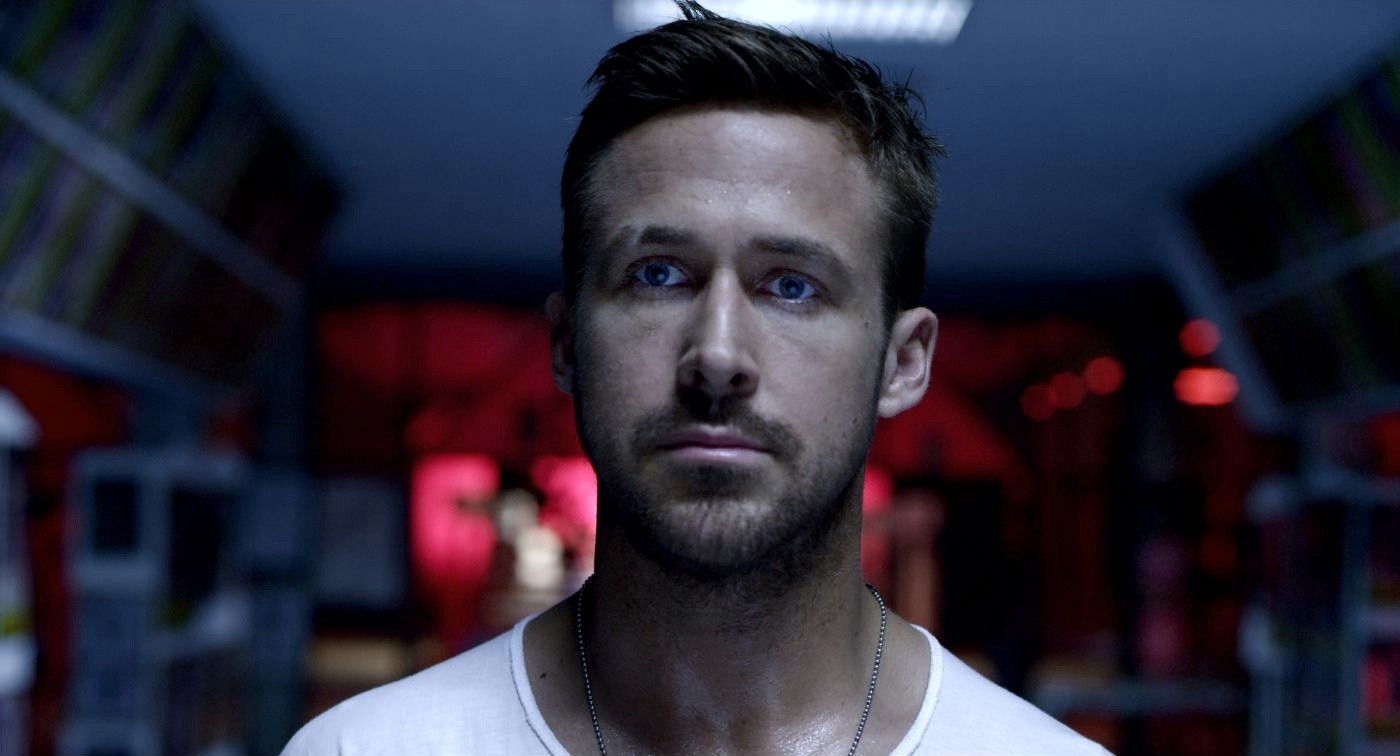
Maximization is the easiest way to hide terrible craftmanship. If you have nothing except sex, you have porn. Nicholas Winding Refn tries to prove that with nothing but violence you have art. Well, in a way, of course you do. Porn is art as well.
Now, Refn wants us to believe there is a deep meaning behind the pretentious mess that is Only God Forgives. Sure, there's some "symbolism" alluding to a man's anger towards an ultimately powerful God, and futile attempts to betray God, and an ultimate penance. However, everything is so blunt and obvious, it requires zero work from the audience member. Now, people claim OGF gets bashed because people didn't expect an art film. True critics can adapt their expectations, as I did, but OGF is just shallow and full of itself. But really, that shouldn't shock me.
Like Refn's other work, OGF is flooded with bright colors and pulsing electronic music. The characters talk stiffly, and here, its essentially a self-parody of the language in Drive and the awful Valhalla Rising. While not awful, I must say that Drive is not the masterpiece many claim it is. The atmosphere is cool as hell, but the film is pretentious and dopey, obviously striving to be remembered as the "unconvential classic" that college pot heads have posters of in their dorm rooms. OGF lacks the cool atmosphere. The color pallet actually becomes boring as hell. However, the soundtrack is interesting, but unfortunately its piled upon layers and layers of uninteresting. Its like a layered dip made of rancid meat, curdled sour cream, acidic and slimy beans, soggy chips, wilted lettuce, and some pretty good Cheddar. Who the hell cares if the cheese is good? No ones going to notice.
The film is just so obvious yet striving to stay edgy and mysterious, its just goofy. The violence, most of the time, means nothing. The Kareokee scenes are just goddamn stupid, as are scenes of Chang, one of the blandest villains I've ever seen, possibly even trumping the gangsters in Mud. Yeah, he's a warlord, but look how he treats his daughter!!! I mean, how many times have we seen that? I don't even think it's possible to count.
I don't even know how else to convey that this film is awful, yet I understood every goddamned second of it. It's so shallow, yet think's its the deep end, and you an practically imagine a stoned Refn sitting at an end of a bed, explaining to you while using his hands animatedly "Yeah, but, Chang, man, he's like a God, and Ryan Gossling, I mean Julian, man, he's like, I don't know, uh, working for Satan. His family, they're sinners, man, and he fights and fights, until he realizes 'Oh shit, man.' But then God, I mean, Chang, man, his brand of forgivness is sacrifice. His hands, man. I'm gonna show his hands, cuz that's all he has, man. Oh, and red. I'm gonna show a lot of red. And Blue. Because of, like, satan and god, man." I am actually offended that Refn wants people to buy into this obvious, insulting, exceedingly violent for violence's sake piece of neon coated shit, and just depressed that people do.
Refn has proven to me, without a doubt in the world, that he is a hack. Refn's filmography is a bastardized orphan of Kubrick, Lynch, Michael Mann, and Quentin Tarantino, yet has no idea what to do with his influences, so throws everything into a blender and pours out goddamn messes every time. At least Drive is watchable, even re-watchable, despite it's flaws and annoying tendencies and tones, but OGF is just unbearable.
Friday, August 2, 2013
Luis Bunuel Retrospective Pt. 3- LAST FILMS IN FRANCE

After Simon of the Desert, a short personal film, Bunuel moved permanently went to work in France. Bunuel still lived in Mexico, but went back to France every few months to make a film. Here, Bunuel slowly became more avant-garde and unlearned much of his commercial narrative flair. This work is, in my opinion, his most daring, admirable and ambitious, and much of it has not been replicated since. All of Bunuel’s work from this period is preserved with high-quality prints, and is readily available, much of it published by the well-respected Criterion Collection.
Belle de Jour and Tristana, both starring Catherine Deneuve, stick with rather traditional narratives, not that is in any way a bad thing. Denueve plays similar characters- repressed young woman restricted by their men. in Belle De Jour, Denueve is a sexually repressed housewife, while in Tristana, she is essentially held captive by her uncle, Fernando Rey in a role similar to Viridiana’s domineering uncle. Both films return to Bunuel’s themes of repression, and Tristana in particular features several religiously charged images, such as the massive bell over Toledo, showing the showing the power of religion over all.
Bunuel’s late career is defined by a “trilogy” of absurd, abstract films he made in the late sixties and early seventies- The Milky Way, The Discreet Charm of the Bourgeoisie, and The Phantom of Liberty. All three have loose, sprawling narratives, and are only linked thematically. The Milky Way deals exclusively with religion, showing Bunuel’s issue with the organization, not the belief in Christ or in Christ’s teaching.
The Milky Way follows two pilgrims on the Way of St. James, making their way to see a shrine (The Way of St. James was the original title of the bright strip of stars in the sky, and thus the film’s title). The two come across various oddities, including blind fortune tellers, odd banquets, and executions. The two seem to traverse through time and space, meeting figures dressed in all kinds of garb, from modern suits, to fancy cloaks, to simple sheets like Romans. The film ends with a powerful scene, showing Christ, who we see throughout the film as a real human, laughing and such, heal two blind men and ignore their requests to have their first sights explained to them while he states that his mission on earth is to tear humanity apart with his beliefs. The healed blind men follow Christ with their walking sticks, unable to cross a ditch without feeling across it. Although they now have the power of sight, they can’t see the world better at all, which is Bunuel’s opinion on religious enlightenment.
Discreet Charm broadened its attack, mocking the upper society’s ambitions and fears, still laying into Christianity, with the powerful character of the vengeful priest, forgiving his parents’ killer on the guy’s deathbed moments before blowing his head off. The plot travels through dreams, stories, and dreams within dreams, focusing on a group of upper class friends who want to dine together, but simply cannot. The film is widely regarded as Bunuel’s masterpiece, winning him the Best Foreign Language Film Academy Award, and finally thrusting him into the public forefront. Sure, Viridiana, Exterminating Angel and Belle de Jour were well known, but Discreet Charm surpasses them all in name recognition.
Bunuel then returned to some good ol’ fashioned surrealism with the ever-bizarre and free Phantom of the Liberty, a sprawling series of loosely connected vignettes, some basically operating as ideas Bunuel found interesting or humorous, jotted down, and then filmed. He explores all of his favorite themes in depth, with a young man sleeping with his Aunt, priests drinking and gambling but repelled by sex, and a young girl reported missing despite being in the same room as her parents and the police, and all adults directly addressing her. Perhaps the funniest and strangest image is when Bunuel returns to dining, having a group of upper-class friends sit around the table on toilets, talking only about deification, while the mere mention of food is repulsive. One man pulls up his pants, excuses himself, and asks the maid quietly where the dining room is. He talk himself in a small stall and opens a cabinet, revealing a chicken dinner he cuts into. The vignette satirizes the criteria of social selection- easily we can see how eating could be considered gross, and we could be trained to accept pooping as normal. In fact, pooping is more natural than easting, and much more universal.
Bunuel’s final film, That Obscure Object of Desire, returns to a more traditional narrative but with a good amount of experimentation. The film tells the story of an older man, Fernando Rey, who falls madly in love with a young woman, played by two different actresses in alternating scenes. One actress is kind to our hero, while the other one openly taunts him and denies him of sex actively. The film is undercut with a deeply paranoid plot of terrorist takeover, showing the certain triviality of Rey’s quest.
Four years after Obscure Object, Bunuel died at age eighty-three. Although I wouldn’t say he was forgotten, many of his films have been overlooked and are essentially unavailable in America. Tristana was just made available this year, while only three films- Obscure Object, Tristana, and Belle de Jour are available on Blu-Ray in America (although one can easily get an import of Discreet Charm and L’Age D’or on the high definition disc). Besides that, many of his later films are on DVD, while many of his Mexican films, I’d even say the bulk, are not even on a major DVD. Many exist on terrible prints, and some are not even available on a torrent website. Bunuel certainly gets respect, but certainly demands more. I urge that some company work on getting this master’s prints and finally doing them justice. I know there are financial factors at play, but I’m sure that consumers exist, and if a company like Criterion picks up the rights, the market will be created with Criterion’s tendency to build up buzz for under-appreciated titled, like what it did with the Pierre Etiax collection earlier this year. Perhaps Bunuel’s “lesser” works can be collected in an eclipse set, while many could be stand-alone releases.
Bunuel still hold audiences to this day. His style is very straight-forward and unpretentious, nearly invisible at times but always working and shocking audiences with powerful themes and imagery. Thirty Years after his death, Bunuel is still remembered fondly and loved by many, and hopefully major interest in him will grow in the upcoming years.
Subscribe to:
Posts (Atom)